
HealthCare, Cancer, WingsMed
Silent but Serious: Why Prostate Cancer is Increasing
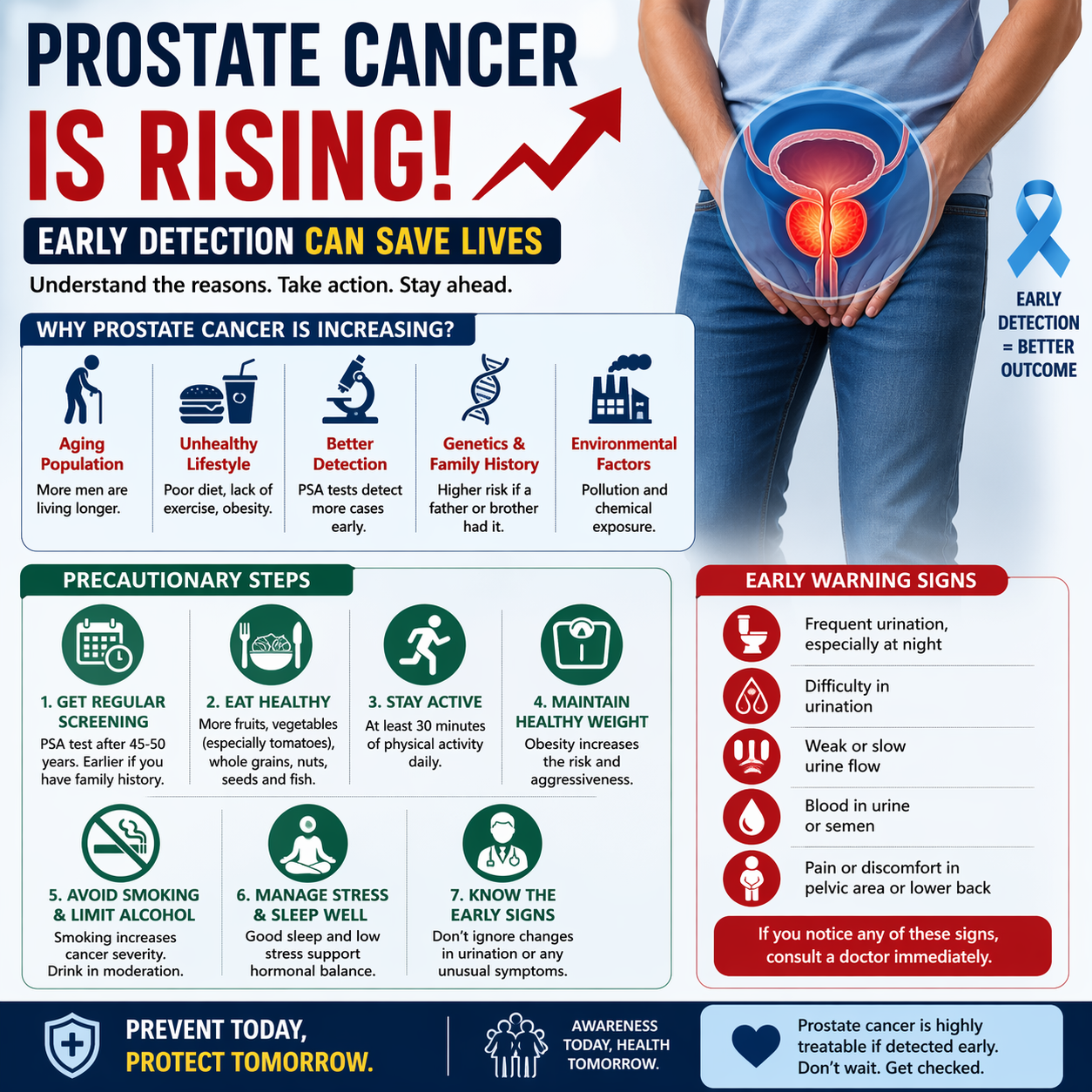
Prostate cancer cases are rising globally—and in countries like India the increase is becoming more noticeable. This doesn’t mean it’s suddenly “more dangerous” than before; it’s a mix of lifestyle shifts, aging populations, and better detection.
Why prostate cancer is increasing
1. Aging population
Prostate cancer is strongly age-related. As life expectancy increases, more men live into the high-risk age group (50+), so total cases naturally rise.
2. Lifestyle changes
Urban lifestyles are a major factor:
- High intake of processed food, red meat, and saturated fats
- Low physical activity
- Obesity and metabolic issues
These are linked to higher risk.
3. Better screening & diagnosis
Tests like the Prostate-Specific Antigen (PSA) test detect more cases than before—even early-stage ones that might have gone unnoticed earlier.
4. Hormonal and metabolic factors
Higher levels of male hormones (androgens), insulin resistance, and chronic inflammation can influence prostate cell growth.
5. Genetic & family history
If a father or brother had prostate cancer, risk is significantly higher.
6. Environmental exposure
Pollution, chemicals, and sedentary indoor lifestyles may also contribute over time.
Precautionary steps (practical & effective)
1. Regular screening (especially after 45–50)
- PSA test + doctor consultation
- Earlier screening if family history
Early detection = very high survival rate.
2. Improve diet
Focus on:
- Fruits & vegetables (especially tomatoes—rich in lycopene)
- Whole grains, nuts, seeds
- Healthy fats (olive oil, fish)
Reduce:
- Red meat
- Processed food
- Excess dairy & fried food
3. Stay physically active
- At least 30 minutes daily (walking, cycling, gym)
- Helps control weight, hormones, and inflammation
4. Maintain healthy weight
Obesity is linked to more aggressive prostate cancer.
5. Avoid smoking & limit alcohol
Smoking increases cancer severity; alcohol should be moderate.
6. Manage stress & sleep
Chronic stress and poor sleep can disrupt hormonal balance.
7. Know early warning signs
Prostate cancer often shows no symptoms early, but watch for:
- Difficulty urinating
- Frequent urination (especially at night)
- Weak urine flow
- Blood in urine or semen
Don’t ignore these—consult a doctor.
